
What helps Huntingdon groundwork stay coordinated
Underground routes considered
Drainage and utility work are planned before finished surfaces go down.
Spoil and material space checked
Working room on site affects excavation method and programme.
Sequence discussed early
Defining the order of work helps surfaces and buried work line up.
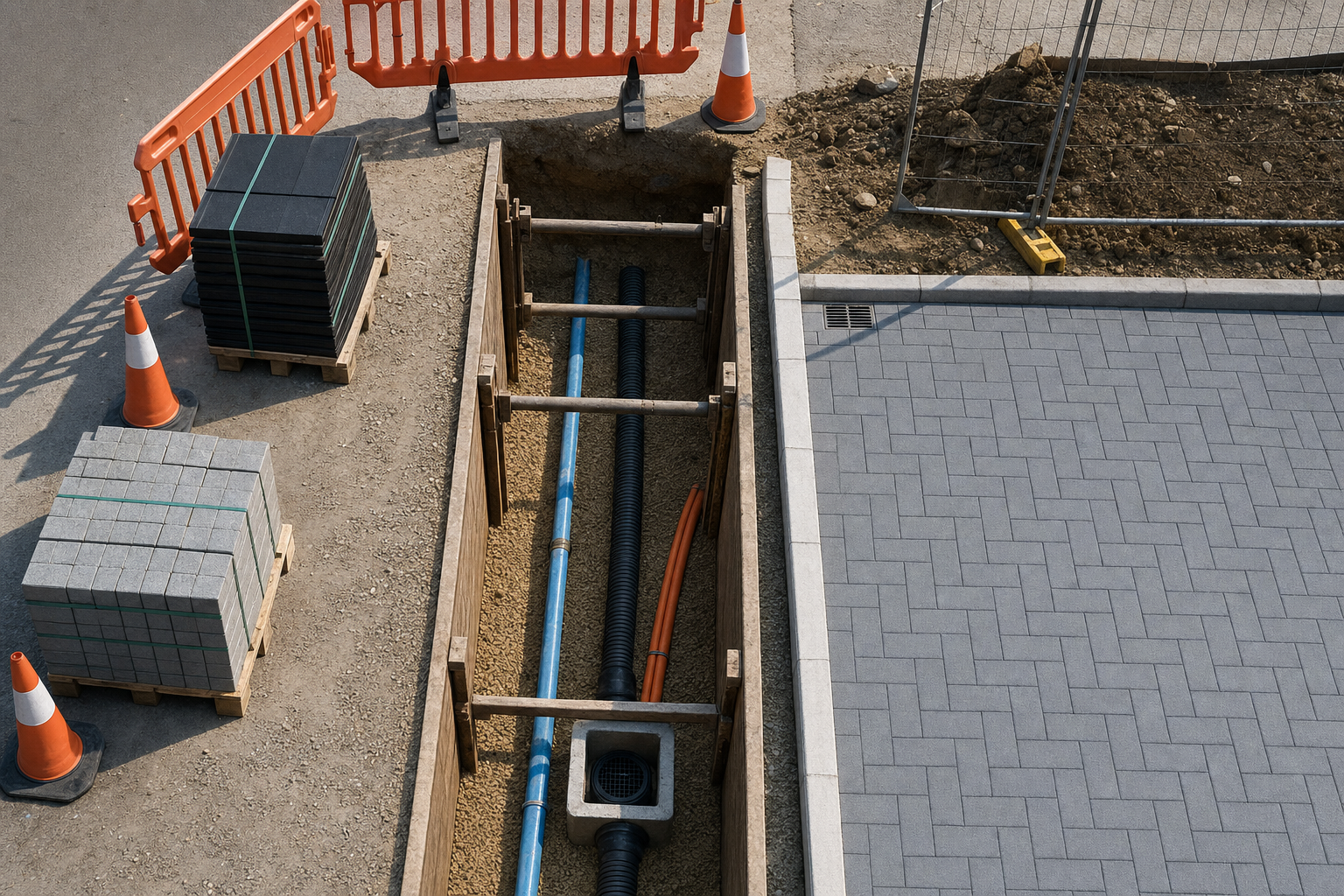
Huntingdon groundwork shaped around what lies below
Huntingdon projects often depend on getting the below-ground work and the finished surface to agree with each other from the start. We carry out excavation and earthworks, commercial drainage and utilities, and commercial paving and surfacing as planned site packages, with the sequence built around the practical needs of the address. With Warren Contracting Services, we ask about excavation access, buried-service information, drainage outfalls and the space available for materials or spoil before the work is set in stone. That matters on a Huntingdon site, because finished surfaces only work well when the ground beneath them has been prepared, drained and coordinated properly.
Useful scope detail for Huntingdon work
A defined site scope and sequence make Huntingdon groundwork far easier to organise sensibly. If underground installations, excavation areas and finished surfacing all meet on the same scheme, we need to understand which elements come first and what access is available for each stage. A package with Warren Contracting Services is discussed around those real dependencies rather than as separate tasks with no effect on one another. Share plans, drainage information, outfall details, photos and any site restrictions early, and we can talk through a practical order of work that fits the project.

Frequently asked questions
What details help with a Huntingdon groundwork enquiry?
Plans, drainage information, buried-service details, access notes, outfall information, photos and programme dates all help. If surfacing follows excavation or drainage work on the same site, it is useful to explain that sequence early so the scope can be discussed properly.
Can you coordinate excavation, drainage and surfacing together?
Yes, where the scope suits it. Discussing those elements together often helps the programme make more sense, especially where drainage routes, formation levels and final surfaces all depend on the same areas being available at different stages.
Why are drainage outfalls and buried services so important?
They influence line, level, trench routes and the way excavation progresses across the site. Knowing where services sit and where water needs to discharge helps prevent awkward clashes and reduces the risk of finished surfaces being disturbed again later.