
Why buried work needs close control
Drainage that actually runs
Careful gradients help foul and surface water systems perform as intended.
Buried services on time
Utility trenches and ducts can be fitted into the wider site programme.
Reinstatement kept in mind
Backfilling and surface reinstatement are planned as part of the job.
Drainage and service routes that line up
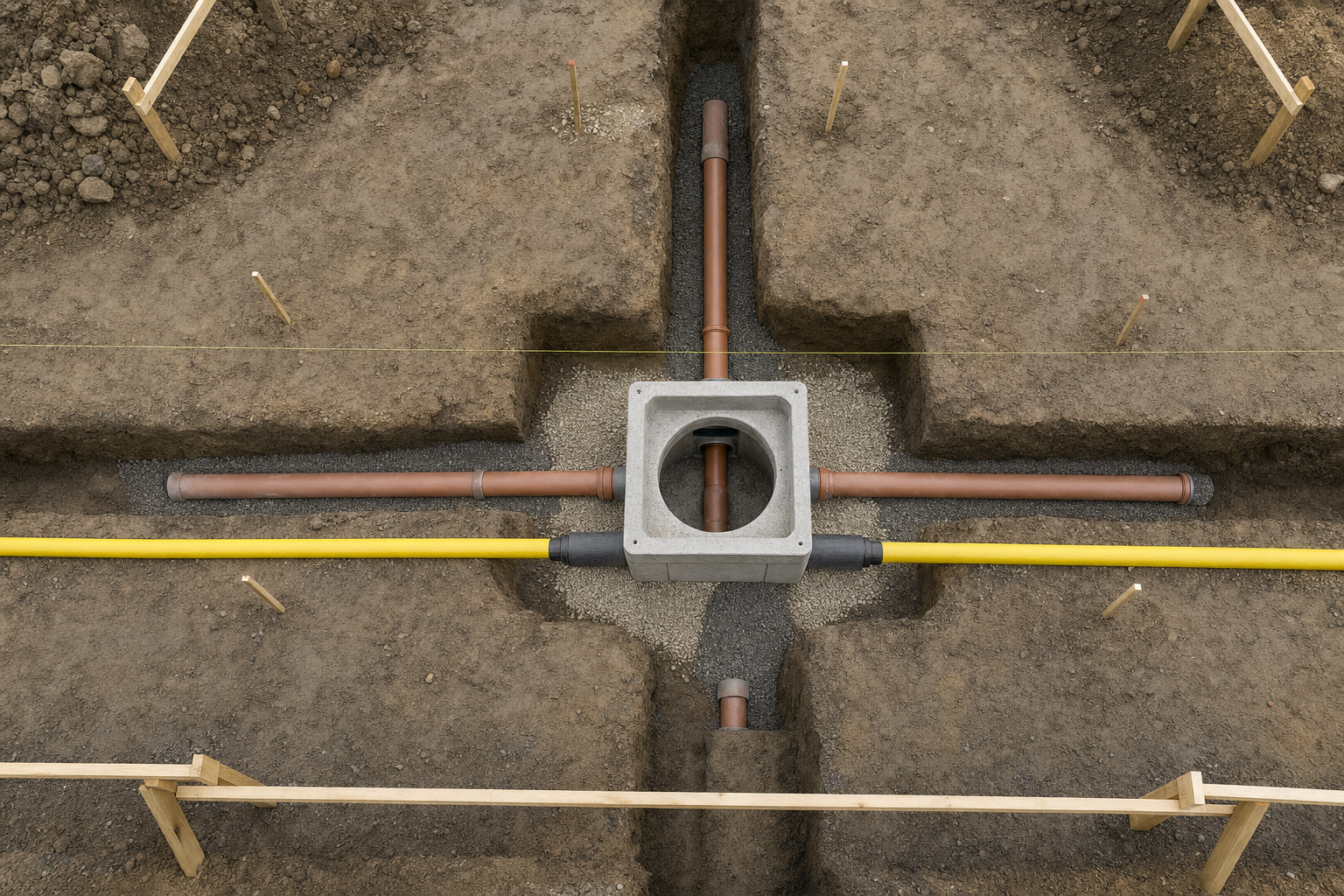
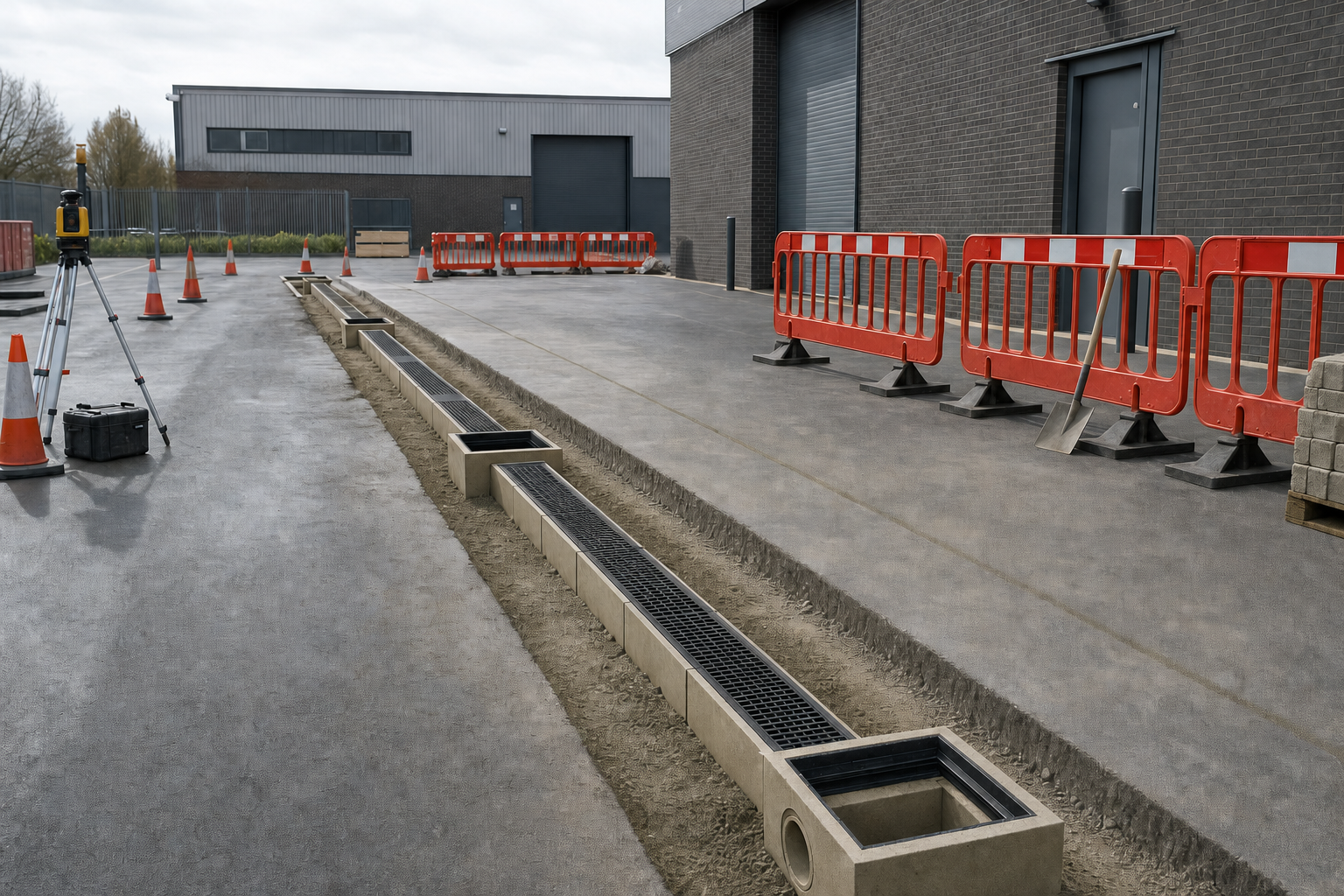
Buried drainage and utility work tends to disappear once the site moves on, which is exactly why it needs doing properly. We carry out commercial foul-water and surface-water drainage together with utility groundwork such as trenches, ducts, service crossings and coordinated entry points. Pipe runs, gullies, channels, manholes and specified connections all rely on accurate line, level and gradient control if they are going to perform once the ground is closed up. With Warren Contracting Services, the work is planned from the drawings and the wider programme, so drainage and utility routes sit where they should and do not clash with the next stage of construction.
Installed at the right stage of the build
The sequence below ground matters. We plan excavation, bedding, installation, inspection or testing, controlled backfilling and reinstatement so the work is not rushed between other site tasks. A package with Warren Contracting Services also considers how buried services need to coordinate with foundations, roads, slabs and external works, because the right trench in the wrong place is still the wrong trench. To assess the job properly, we need drainage layouts, service information, levels, access details and enough programme context to understand when each element needs to happen.
Frequently asked questions
What information helps with a drainage and utilities enquiry?
Drainage drawings, service layouts, levels, connection points, access notes and programme details all help. If there are existing services on site, any records or site photos are useful too, as they can affect trench routes, working space and the sequence of installation.
How are pipe gradients and levels controlled on site?
We work from the drawings and setting-out information, checking line and level as the work progresses so the installed system follows the required falls. That is important because small errors below ground can cause poor flow, awkward connections and expensive reopening later.
When should drainage and utilities be installed in the programme?
That depends on the project, but they usually need close coordination with foundations, slabs, roads and external works. Discussing the sequence early helps prevent buried services being delayed until access is poor or other completed work has to be disturbed to fit them in.