
What helps Newark-on-Trent jobs run well
Existing surfaces assessed early
Condition surveys help shape the right repair or reconstruction approach.
Access for excavation planned
Plant routes and working space are considered before the start date.
Retained use can be discussed
Phasing can be explored where access needs to stay available.
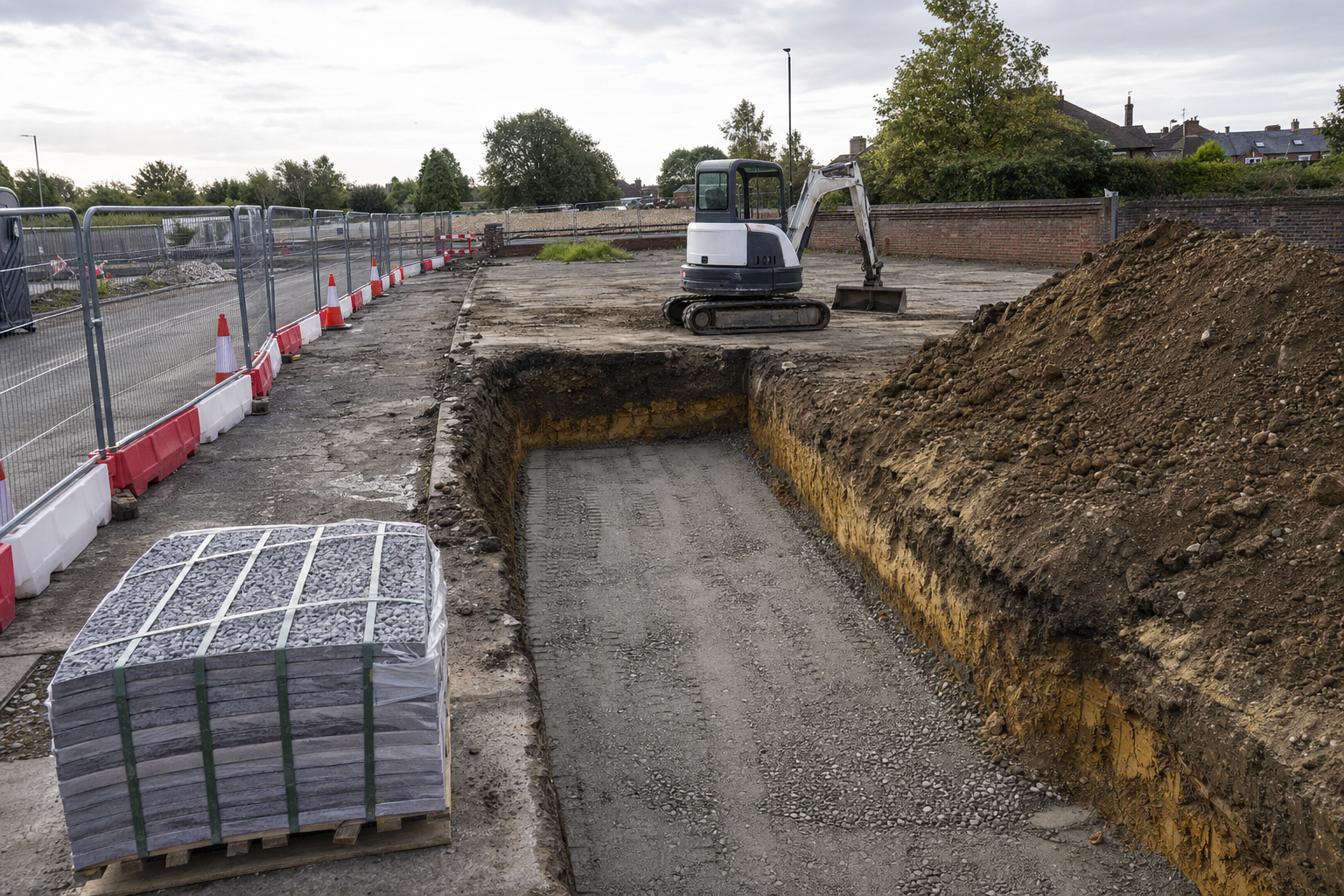
Groundwork for Newark-on-Trent business and home sites
We carry out Newark-on-Trent projects as planned site work, travelling with the labour, plant and materials needed for the scope agreed. Representative enquiries here often focus on commercial car park construction, concrete yard remediation and domestic groundworks, which means existing surfaces and access arrangements need proper attention from the start. With Warren Contracting Services, we want to understand what is already on site, what has failed, how excavation equipment can reach the area and how spoil or replacement materials will move through the job. That early picture helps us judge the best route instead of trying to improvise around surprises later.
Useful detail before a Newark-on-Trent start
Clear information about the Newark-on-Trent site layout, retained access and the required completion sequence makes the planning much easier. If a car park still needs partial use, a yard has obvious surface failure or a domestic plot has awkward access, those details affect how the work is phased and priced. A package with Warren Contracting Services is discussed around real site conditions, not generic assumptions. Plans, photos, basic measurements and notes on traffic or spoil movements all help us talk through the practical method in a way that is worth your time.
Frequently asked questions
What should I share for a Newark-on-Trent enquiry?
Plans, site photos, measurements, access notes and details of any retained traffic or business use all help. If the issue relates to a damaged concrete yard or car park, it is useful to describe the visible defects and how the area is currently being used.
Can you inspect existing surfaces before planning the work?
Yes, understanding the condition of the existing area is important, especially for remediation or reconstruction. Visible cracking, settlement, drainage trouble and access limits all affect whether local repair, phased replacement or wider rebuilding is likely to make more sense.
Why do spoil and material movements matter so much?
They affect programme, access and the practical shape of the job. On tighter sites, or where existing use has to continue, the route for excavated material out and new material in can be one of the biggest influences on how smoothly the work will run.