
What dependable domestic drainage depends on
Pipes laid to the right fall
Correct gradients help drainage keep moving instead of backing up later.
Utility routes kept clear
Ducts and service trenches can be planned alongside drainage runs.
Surfaces reinstated afterwards
Drives, paths and gardens are considered as part of the whole job.

New drainage and service routes for home projects
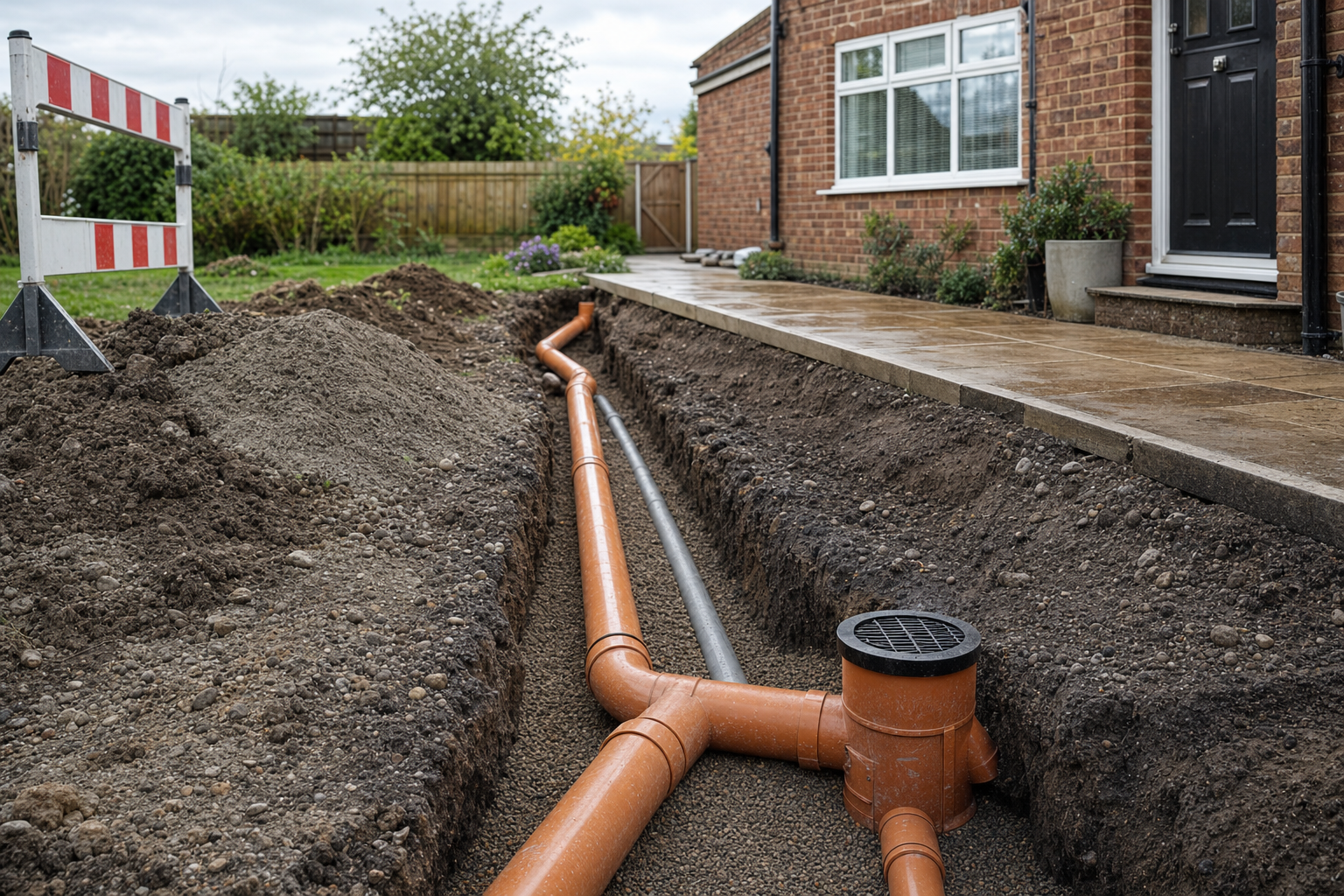
Domestic drainage problems rarely improve by being ignored, and new home work often needs below-ground routes planned before the visible build can move on. We carry out new and replacement drainage runs, surface-water systems and groundwork for utility ducts or service routes associated with changes to the property. Pipe gradients, bedding, inspection access and suitable connection points all matter if the system is going to work dependably once the trench is closed. With Warren Contracting Services, we look at the whole route of the run, not just the first hole in the ground. That includes how the new drainage or ducting links with extensions, outbuildings or changes in the way the site will be used.
Installed, checked and reinstated properly
The work usually involves excavation, installation, inspection, backfilling and reinstatement of drives, paths or garden surfaces disturbed by the trench. A package with Warren Contracting Services can cover trenches and duct routes for services as well as drainage, which helps when several below-ground elements need to be coordinated in the same area. Site plans, known service locations, access restrictions and the intended connection or discharge arrangement all help us assess the job properly. It is far better to sort those practical points early than discover halfway through that the obvious route was only obvious because nobody had looked closely enough.
Frequently asked questions
What information helps with a domestic drainage enquiry?
Site plans, approximate pipe runs, connection details, known service locations, access information and photos of the area are all useful. If the work relates to an extension or outbuilding, sharing those plans early helps us see how the below-ground routes need to fit the wider project.
Can drainage and utility ducts be installed together?
Yes, where the project requires both. Coordinating the trench routes and sequence can make the work more efficient and reduce repeat disturbance to the same area. It also helps with planning access, reinstatement and the final layout of the site once the ground is closed up again.
How are disturbed paths or driveways dealt with afterwards?
Reinstatement is part of the discussion from the start. Once the drainage or utility work is complete and the trench is backfilled correctly, we can plan how paths, driveways or garden surfaces need to be made good so the finished area is usable again rather than left rough.