
What good civil groundwork should achieve
Technical details kept in view
Levels, tolerances and setting out stay central from start to finish.
Linked civil elements in one scope
Foundations, drainage and hardstanding can be coordinated together.
Early review reduces clashes
Programme and access issues are easier to solve before the site crowds up.

Engineering-led groundwork with technical control
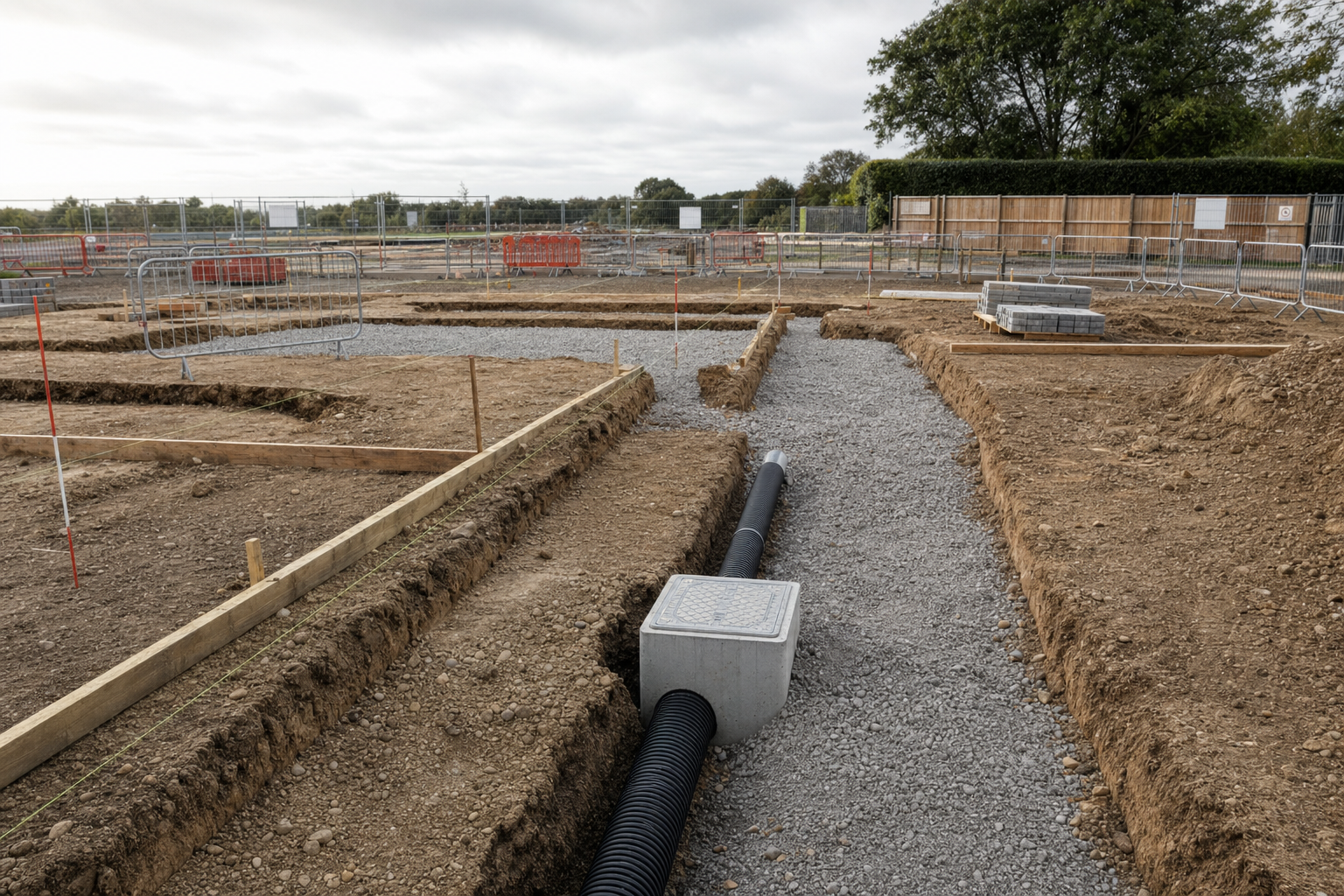
Some groundwork packages need more than a straightforward dig and pour. Civil engineering groundworks are usually driven by technical drawings, specified tolerances and a tighter relationship between buried infrastructure, structural elements and finished external areas. We carry out these packages with close control of dimensions, levels and construction details so foundations, drainage, concrete, roads, hardstanding and service infrastructure line up as the design intends. With Warren Contracting Services, the work is shaped around setting-out data, ground conditions and the real interfaces on site, because it only takes one element to drift for the rest of the package to fall apart.
Useful before complex sites start to clash
On more involved schemes, early review saves a lot of chasing later. We look at the drawings, access, material quantities and programme dependencies before the site becomes crowded with people all wanting the same patch of ground. A package with Warren Contracting Services can pull together structural foundations, below-ground drainage, concrete elements, roads and external hardstanding within one civil scope where the project suits it. That joined-up approach helps when tolerances are tight and the order of work matters, particularly at the interfaces between buried infrastructure, structural works and finished surfaces.
Frequently asked questions
What makes a package civil engineering groundworks?
It is usually a technically driven scope that combines several engineered elements and relies on closer control of drawings, dimensions, levels and construction details. The work often links structural foundations, drainage, concrete and external infrastructure rather than treating each piece in isolation.
What information is useful at an early stage?
Technical drawings, levels, setting-out data, ground information, access details, material quantities and the planned programme all help. Seeing that information early lets us discuss interfaces and likely pressure points before the project is committed to a sequence that causes clashes.
Can you combine several civil elements in one package?
Yes, where the scope is suited to it. We can coordinate structural foundations, below-ground drainage, concrete elements, roads, hardstanding and service routes within one package, which can help keep tolerances, sequencing and handovers under better control.