Distribution Yard Construction in Grantham: What to Specify for HGV Traffic, Drainage and Long-Term Performance
If you are planning distribution yard construction in Grantham, the right specification matters long before any finished surface goes down. HGV loading, braking forces, turning movements, drainage falls and ground preparation all affect how the yard performs once it is in daily use. Get those decisions right early and you reduce the risk of ponding, rutting, edge breakdown and disruptive remedial works later on.
At Warren Contracting Services, we deliver commercial groundworks and civil engineering projects from our Grantham base, including distribution yards, drainage, excavation, paving and concrete works. This guide explains what commercial clients, architects and contractors should define before work starts if they want a yard that stands up to operational demand and supports long-term performance.
Distribution yard construction Grantham: start with how the yard will actually be used
A distribution yard is not simply a larger version of a car park. It is a hard-working operational area that may need to cope with repeated HGV traffic, slower turning movements, frequent stopping, standing loads and loading activity concentrated in specific locations.
That means the specification should start with the yard’s real use, not just its outline on a drawing.
Define the traffic profile clearly
Before finalising the build-up and drainage layout, it helps to confirm:
the types of vehicles using the yard, including articulated lorries, rigid HGVs, vans or site plant
how often vehicles will enter, queue, turn, reverse and park
whether trailers will be stored on site
where loading and unloading will take place
whether external areas will also see forklift or service vehicle traffic
These details influence excavation depth, sub-base requirements, surface selection and how localised high-stress areas should be built.
Identify high-stress zones early
Not every part of the yard receives the same level of wear. On many industrial and logistics sites, the most demanding areas include:
site entrances and exits
gatehouse holding lanes
turning heads
loading bay aprons
bin store and service yard areas
trailer parking and manoeuvring zones
If these locations are not allowed for in the specification, premature surface distress is far more likely. The goal is to build the right solution for each operational zone rather than applying a one-size-fits-all approach across the whole site.
What to specify in the groundworks and pavement build-up
Long-term yard performance starts below the finished surface. Even a good-looking finish will struggle if the formation is weak, levels are inconsistent or the build-up does not reflect the traffic it needs to carry.
That is why early input from an experienced commercial groundworks contractor in Grantham can add value before work reaches site.
Begin with the existing ground conditions
No two sites start the same. Existing surfacing, made ground, soft spots, buried obstructions and previous service runs can all affect the construction method. On some sites, yard extensions also need to tie into older external works that were built to a different standard.
Before work starts, the team should understand:
what is currently on site
what needs breaking out or reducing
whether levels work with the proposed drainage strategy
where services may cross the working area
how any weak or variable ground will be managed
This is where proper excavation and earthworks support becomes critical. Good yard construction is rarely about surface finish alone; it is about setting the whole platform up correctly from the start.
Specify the right build-up for HGV traffic
For a distribution yard, the pavement build-up should reflect real loading rather than assumptions. Heavier traffic, repeated turning and standing loads typically place more stress on the construction than general car use.
While the exact detail should be matched to the scheme design, the specification usually needs to cover:
formation preparation and proof rolling where required
sub-base type and thickness
any geotextile or stabilisation measures if needed by ground conditions
surface course selection suited to the yard’s use
edge restraint and tie-ins to adjacent roads, bays and hardstandings
The key point is simple: a yard that takes regular HGV movements should be designed and built as such. Under-specifying to reduce upfront cost can lead to higher maintenance costs and more operational disruption later.
Choose the surface for function, not appearance alone
Surface choice should support how the yard will be used every day. Some projects may benefit from robust concrete works and paving solutions in areas subject to high point loading, braking or repeated manoeuvring. Other parts of the scheme may call for alternative heavy-duty surfacing depending on layout, programme and maintenance considerations.
What matters most is that the surface and the layers beneath it are treated as one system. A good specification considers traffic, drainage, joints, transitions and future maintenance together rather than in isolation.
Drainage is not an add-on detail
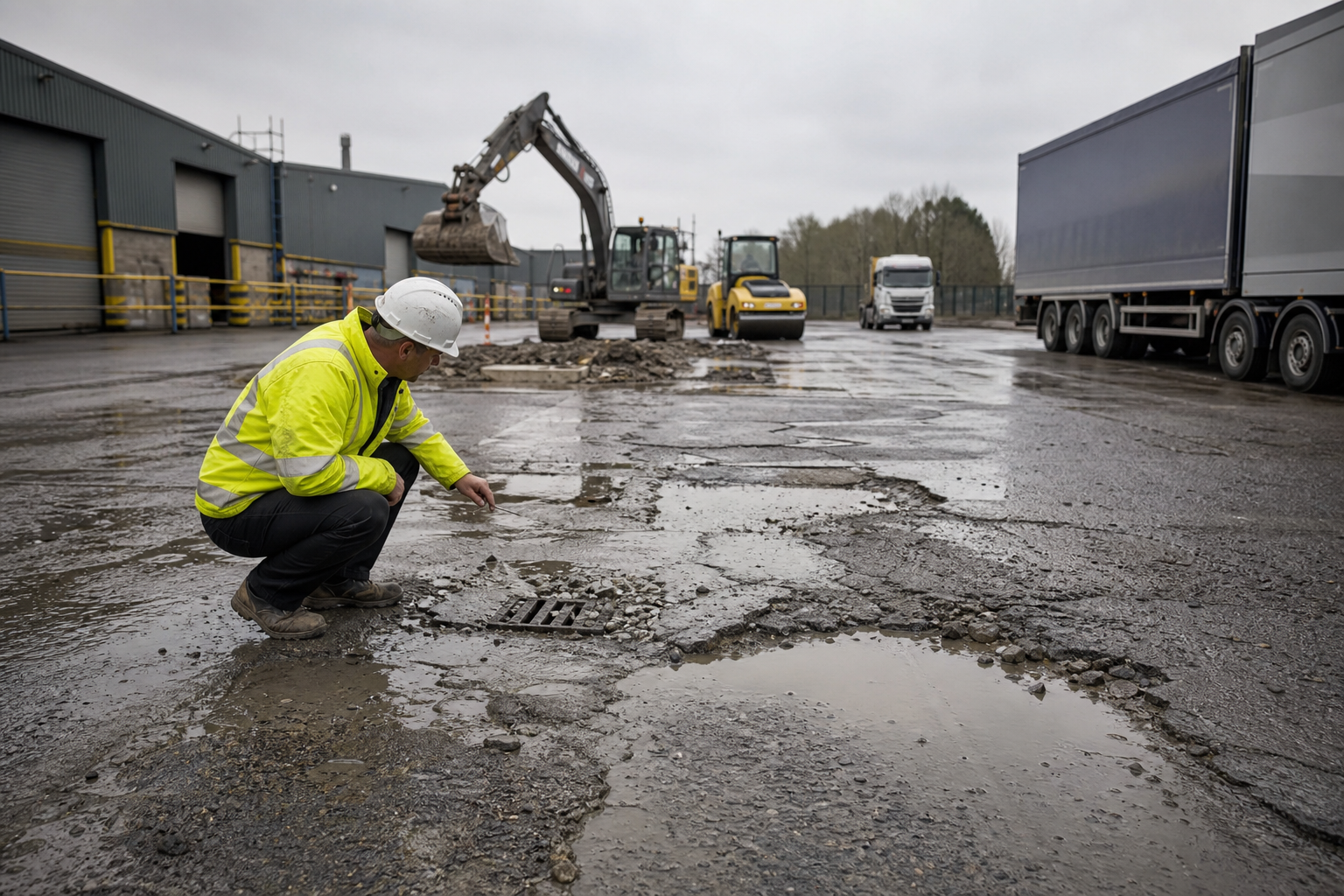
Drainage issues are one of the most common reasons commercial yards underperform. Standing water is not just inconvenient. It can affect safety, increase wear, disrupt loading operations and shorten the life of the finished surface.
On a distribution yard, drainage should be resolved alongside levels and pavement design, not left until late in the programme.
Set out falls and levels early
Yard levels need to work with building thresholds, dock areas, access roads and discharge points. If falls are too flat, water may sit on the surface. If they are poorly coordinated, you can create awkward transitions, ponding in turning zones or drainage runs that clash with other works.
A well-considered layout should account for:
positive falls across the yard
drainage channels, gullies or collection points in suitable locations
tie-ins to the wider site drainage strategy
loading bay and doorway thresholds
safe water management around pedestrian and vehicle routes
Coordinate drainage and utilities with the yard package
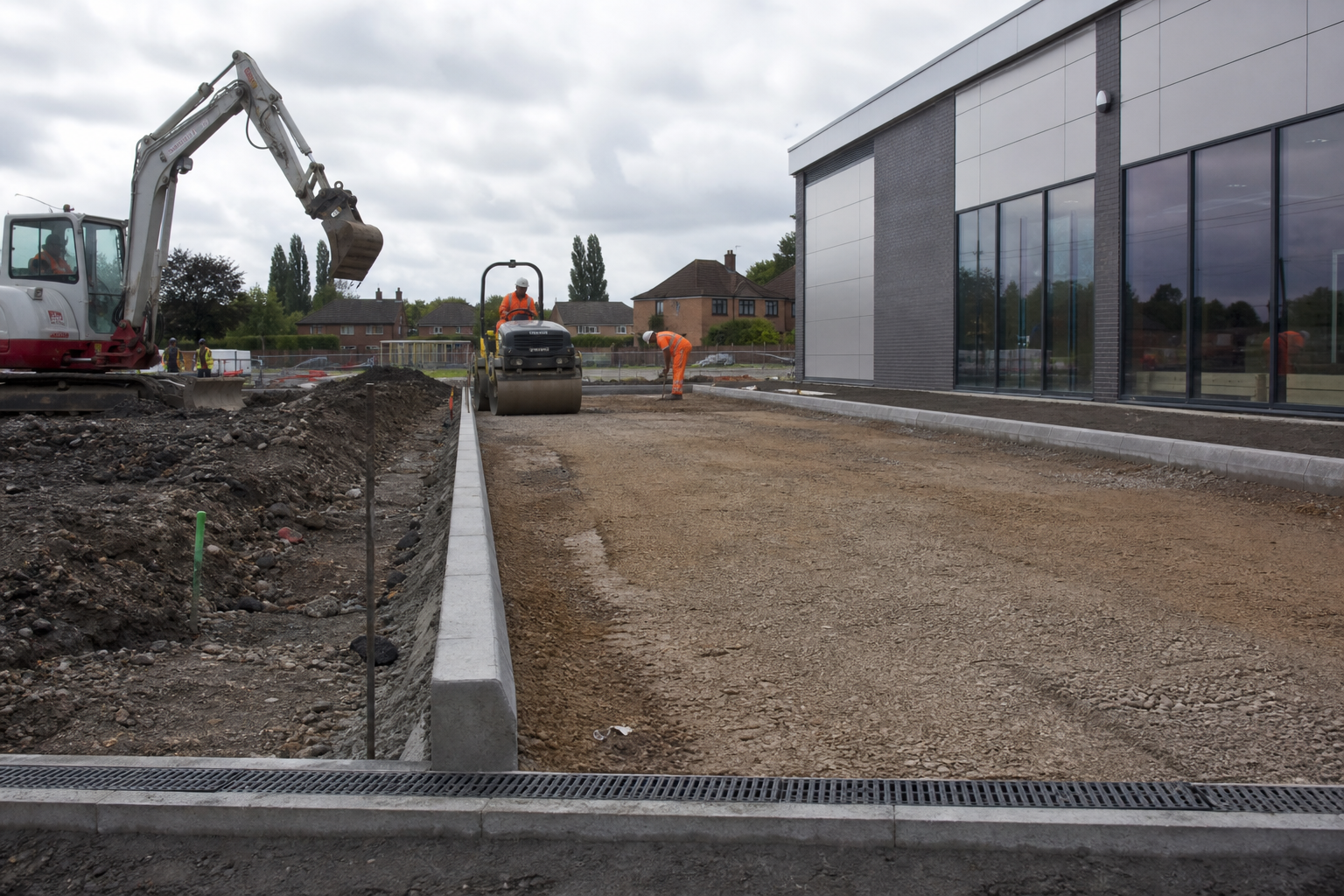
Drainage and service routes should not be designed in isolation from the hardstanding. Covers, chambers, ducting and utility crossings all need to sit correctly within the finished construction.
At Warren Contracting Services, our work includes drainage and utilities works as part of wider commercial external packages. That joined-up approach helps reduce clashes, rework and late changes once the yard build-up is under way.
Think about long-term maintenance access
Drainage should also be practical to maintain after handover. If access points are poorly positioned or channels are likely to trap debris in operational areas, maintenance becomes harder and performance can decline over time.
A good drainage specification should balance hydraulic performance with real-world use of the site.
Long-term performance depends on detail, not just thickness
A durable yard is usually the result of many good decisions rather than one oversized element. Construction quality, sequencing and detailing all influence how well the surface performs over time.
Pay attention to edges, joints and transitions
Even on a well-designed yard, local weaknesses often show up first at edges and change points. Particular care is usually needed around:
kerb lines and perimeter restraints
connections between old and new surfacing
service covers and drainage channels
door thresholds and loading bay interfaces
areas where one surface type meets another
If these details are rushed or poorly coordinated, they can become failure points under traffic.
Plan the build around the wider programme
Distribution yard construction often sits within a larger commercial build. That means access, phasing and programme coordination matter. If heavy traffic is allowed onto areas too early, or if follow-on trades damage prepared levels, the finished result can suffer.
It is usually worth agreeing:
site access routes during the works
construction phasing
when drainage, kerbing and utility elements will be installed
when surfacing will be protected from traffic
what temporary measures are needed to keep the site operational
Consider remediation where full replacement is not the only option
Not every commercial yard project starts on a clear site. Some clients need to extend, strengthen or repair existing hardstanding as part of a wider upgrade. In those cases, the key is understanding whether sections can be retained, remediated or tied into new works without storing up future problems.
Because we provide yard remediation as well as new construction, we can help clients think through practical options for refurbishing worn external areas while keeping the long-term use of the site in view.
Why clients choose Warren Contracting Services for commercial yard projects
We are a small, family-run groundworks and civil engineering company based in Grantham. We have been established for ten years, with the owner bringing over 40 years of industry experience.
Our focus is on commercial groundwork and civil projects, including distribution yards, foundations, paving, concrete works, drainage and excavation. We use a core team of regular operatives and trusted subcontractors so we can scale to suit each job while keeping a hands-on approach.
That matters on distribution yard projects, where clear specification, practical sequencing and consistent workmanship all contribute to the final result.
What to send when asking for a distribution yard quotation
If you are budgeting or preparing to tender a yard package, clearer information normally leads to a more accurate discussion from the outset.
Useful items to send include:
site drawings or proposed layouts
a brief description of the yard’s intended use
vehicle types and expected traffic levels
any known drainage issues or existing service plans
photographs of the site or current hardstanding
target programme and access constraints
If details are still being developed, that is fine. An early conversation can still help identify what needs resolving before construction begins.
Frequently asked questions
What should be included in a specification for distribution yard construction in Grantham?
A good specification should cover the intended traffic, operational zones, ground preparation, excavation depth, pavement build-up, drainage strategy, levels, surfacing type, service coordination and edge details. The exact construction should match the site conditions and the use of the yard.
Is concrete always the best option for an HGV yard?
Not always. Concrete can be a strong option in areas subject to heavy loading or repeated manoeuvring, but the right answer depends on the layout, loading pattern, drainage, maintenance plan and overall scheme design. Surface selection should be based on function rather than assumption.
Can you extend or remediate an existing commercial yard?
Yes. We undertake yard remediation alongside new commercial groundworks. On some projects, the best solution is to repair, strengthen or extend part of an existing yard while integrating it properly with new drainage and surfacing works.
When should drainage be designed on a yard construction project?
As early as possible. Drainage should be considered at the same time as levels, thresholds, service routes and pavement construction. Leaving drainage decisions too late often creates avoidable changes, awkward falls or performance issues after handover.
What is the best way to get a price for a new distribution yard?
Send your drawings, site photos and a brief outline of the yard’s intended use. If you already know the vehicle types, drainage requirements and target programme, include those too. The clearer the brief, the easier it is to discuss an appropriate construction approach and likely scope.
Talk to us about your project
If you are planning distribution yard construction in Grantham or within roughly 60 to 70 miles of our base, we would be happy to review your requirements. Send us your drawings or site information and we can discuss the practical considerations around HGV traffic, drainage and long-term performance.
To start the conversation, email contracts@warrencs.uk, call 01476 338020, or visit Warren Contracting Services.