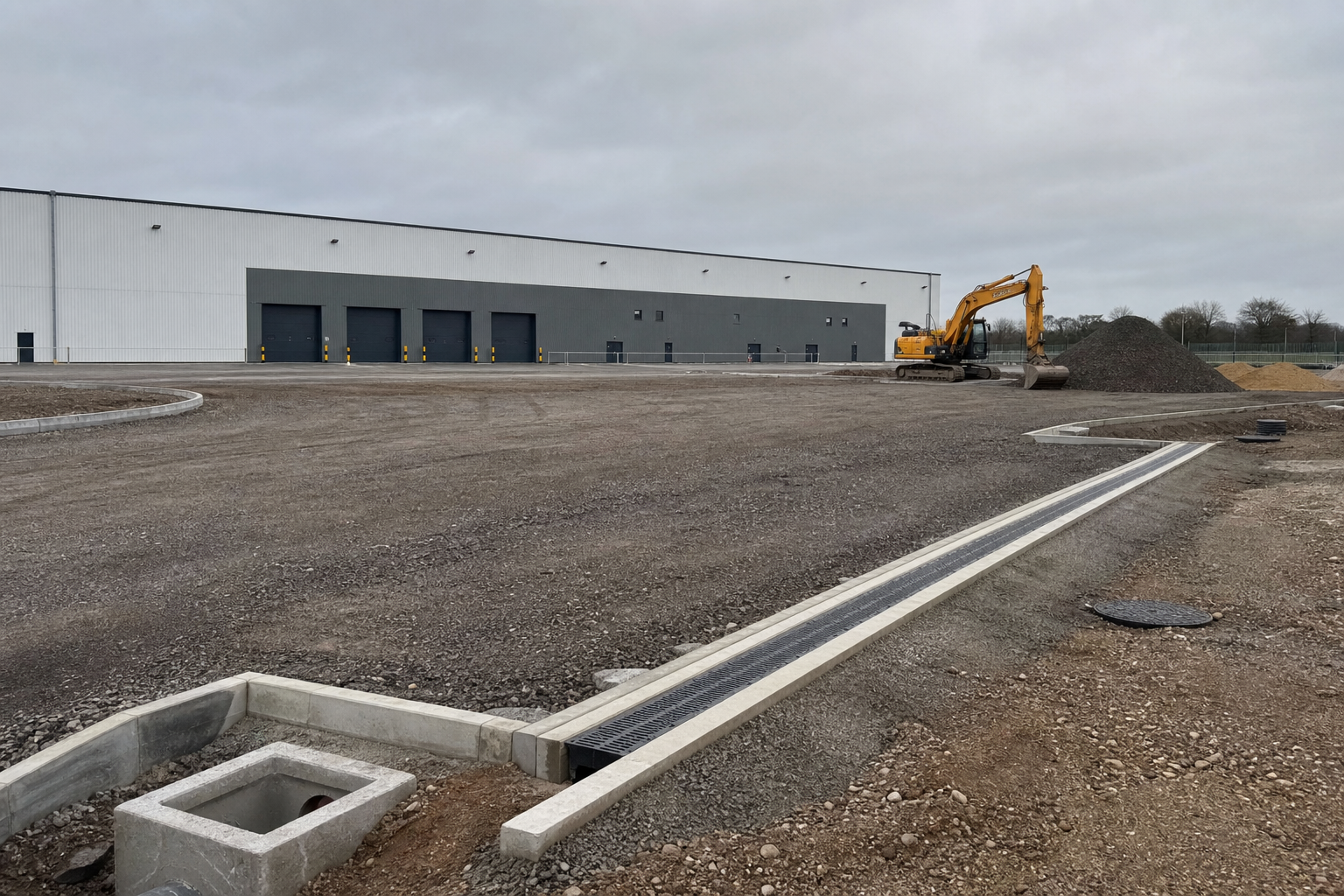
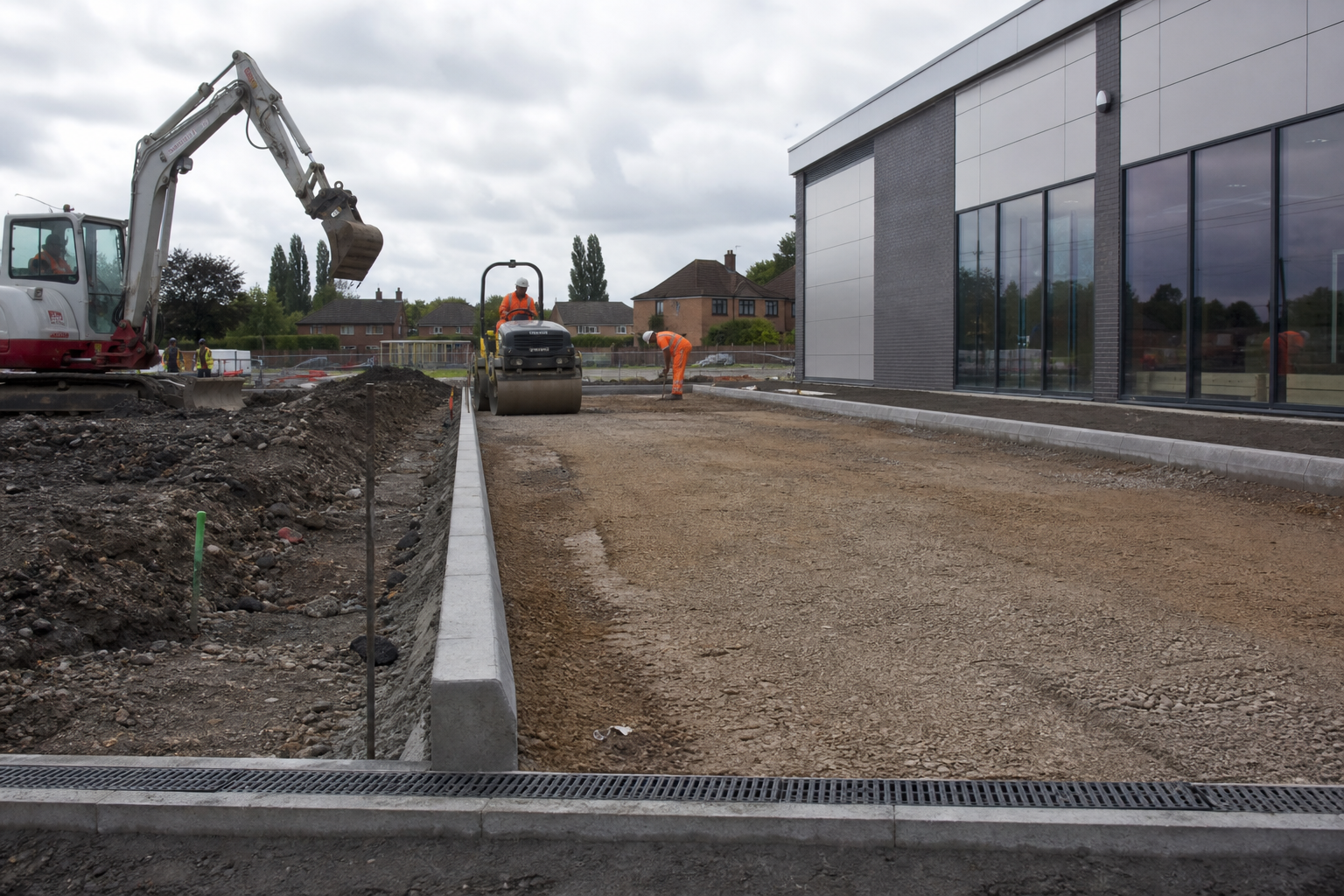
Yard Remediation in Grantham: Does Your Commercial Yard Need Repair, Resurfacing or Full Reconstruction?
If you are searching for yard remediation Grantham, it usually means your site is already affecting day-to-day operations. Water is sitting where it should drain away, HGV turning areas are rutting, edges are breaking up, or repeated patch repairs are no longer lasting.
The right answer is not always a full rebuild. In some cases, targeted repairs will deal with a localised problem. In others, the visible damage is only a symptom of deeper issues with drainage, sub-base failure or a yard that is no longer suitable for the traffic it now carries.
At Warren Contracting Services, we deliver commercial groundworks and civil engineering from our Grantham base, including yard remediation services, drainage, surfacing and concrete works. This guide explains how to tell when an existing commercial yard needs repair, resurfacing or full reconstruction, and why an early site review can prevent bigger disruption later on.
Common signs a commercial yard needs attention
Commercial hardstanding rarely fails without warning. In most cases, the surface starts showing a pattern of distress before the problem becomes severe enough to affect access, loading or safety.
Rutting in wheel tracks and turning areas
Repeated heavy traffic, braking and slow turning movements can deform the surface over time. If rutting is developing where HGVs queue, reverse or manoeuvre, the issue may be more than cosmetic.
Cracking, potholes and loose material
Cracks often allow water into the construction below. Once moisture gets into weaker areas, potholes, fretting and surface breakdown can accelerate, especially through winter conditions and constant traffic loading.
Ponding and poor drainage
Standing water usually points to lost levels, poor falls, blocked drainage or settlement within the construction. Ponding is not just inconvenient. It often shortens the life of the yard and can lead to ongoing deterioration.
Edge breakdown and failing access points
Yard edges, entrances and loading areas often take concentrated stress. If kerb lines are unsupported, the surface has started to unravel at the perimeter, or access points are dipping, the structure may need more than a surface patch.
Repeated short-term repairs
If the same area keeps failing, that is usually a sign the cause has not been addressed. A patch may hide the problem briefly, but it will not correct weak layers, drainage defects or an under-specified build-up.
What usually causes yard failure?
An existing yard can fail for several reasons, and the most effective solution depends on the real cause rather than the visible symptom.
Traffic loading has changed: a yard originally used by lighter vehicles may now be handling regular HGV movements, forklifts, trailers or plant.
Drainage is no longer performing: blocked runs, poor falls or failed drainage details can leave water trapped in the pavement construction.
The original build-up is inadequate: if formation, sub-base or surfacing was not designed for the operational demand, failure can appear early or worsen quickly.
Settlement has occurred: localised sinking may indicate problems beneath the surface, particularly around utility runs, trenches, edges or repaired sections.
High-stress areas are taking concentrated loads: loading bays, turning heads, entrances and standing areas often wear faster than the rest of the yard.
That is why remediation needs a practical assessment. Treating every damaged yard as a simple resurfacing job can be an expensive mistake if the real issue sits below the top layer.
Yard remediation Grantham: repair, resurfacing or full reconstruction?
When clients ask us to review a failing yard, the main question is usually straightforward: how much work is actually needed? The answer depends on the extent of the failure, the condition of the construction underneath, the drainage performance and the demands of the site.
When targeted repair may be enough
Local repair can be the right option when defects are clearly confined to a small area and the wider yard remains structurally sound.
Isolated potholes or broken patches
Small areas of edge failure
Localised settlement that can be opened up and rebuilt properly
Minor damage around access points or service crossings
This approach is most suitable where the underlying construction is still in reasonable condition and the failure is not repeating across the site.
When resurfacing is the sensible next step
Resurfacing can make sense when the yard has widespread wear at surface level but the underlying structure is still capable of performing, subject to any localised repairs being completed first.
The surface is aged, worn or uneven
Cracking is broad but not driven by deep structural failure
Levels need modest correction
The goal is to extend service life without fully rebuilding the whole area
Before resurfacing, it is still important to resolve any drainage defects and cut out weak spots. A new wearing surface will only perform well if the base below it is stable.
When full reconstruction is the better investment
Full reconstruction is often the right choice when failure is structural rather than superficial. Although it involves more work, it can be the more cost-effective option if the yard is already beyond repeated patching.
Rutting and deformation are widespread
Ponding is linked to settlement or failed levels across the site
The existing build-up is too weak for current traffic
Repairs have been carried out several times without lasting improvement
The yard layout, drainage or loading pattern has changed significantly
In those situations, rebuilding the affected areas properly can protect operations, reduce repeat disruption and provide a better long-term result.
How we assess an existing commercial yard
Every site is different. A yard serving a warehouse, agricultural operation, trade counter or industrial unit will have its own loading patterns, drainage constraints and access priorities. Our role is to assess the site practically and recommend a scope that suits how the yard is really used.
We review the visible defects. That includes rutting, cracking, settlement, potholes, ponding and failing edges.
We look at operational use. Vehicle types, turning movements, standing loads and loading activity all affect the right solution.
We consider the likely failure mechanism. Is the issue surface wear, drainage-related deterioration, weak sub-base, localised trench settlement or a combination of factors?
We define the most suitable scope. That may involve repairs, drainage upgrades, resurfacing, reconstruction or a phased combination.
We plan the works around the site. On working commercial premises, access, sequencing and disruption matter just as much as the specification.
Where drainage is contributing to deterioration, we can combine remediation with drainage and utilities work so the problem is addressed at source rather than simply covered over.
Where higher-stress areas need a more robust finish, we may also advise paving and surfacing solutions or concrete works for heavy-use areas, depending on the layout and traffic demands.
Why early remediation usually costs less than delay
Many yard defects start as manageable problems and become more disruptive when they are left in service too long. Water ingress spreads, potholes enlarge, and traffic keeps stressing the same weak areas.
Acting earlier can help you:
reduce unplanned disruption to deliveries, loading and staff access
avoid repeated temporary patch repairs
protect vehicles, plant and daily operations
improve drainage and site presentation
plan the work in a controlled way instead of reacting to a failure
For commercial sites, the goal is not just a better-looking surface. It is a yard that performs reliably under the loads it actually carries.
What to prepare before booking a site review
If you want a quicker and more useful discussion about the condition of your yard, it helps to have a few details ready.
What vehicles use the yard now, and whether that has changed over time
Which areas fail first or repeatedly
Whether standing water appears after rainfall
Any known drainage issues or previous repairs
How the works may need to fit around trading, loading or access requirements
The clearer the operational picture, the easier it is to judge whether repair, resurfacing or reconstruction is the best route.
Why Warren Contracting Services is well placed to help
We are a family-run groundworks and civil engineering company based in Grantham. We have been established for ten years, and the owner brings over 40 years of industry experience. Our work includes commercial groundworks, distribution yards, drainage, paving, surfacing and concrete works.
We use a core team of regular operatives and trusted subcontractors so we can scale to suit each job while keeping a hands-on approach. We regularly work with commercial clients, architects and contractors across Grantham and roughly a 60 to 70 mile radius.
That practical background matters on remediation projects, because diagnosing failure correctly is every bit as important as carrying out the repair itself.
Frequently asked questions about yard remediation in Grantham
What is yard remediation?
Yard remediation is the process of repairing or restoring a damaged commercial yard so it performs properly again. Depending on the condition of the site, that can range from localised repairs to resurfacing, drainage improvement or full reconstruction.
Can part of a commercial yard be repaired without rebuilding everything?
Yes, if the damage is localised and the surrounding construction remains sound. The key is identifying whether the failure is limited to one area or whether it is a symptom of wider structural or drainage problems.
How do I know if drainage is causing my yard to fail?
Persistent ponding, water tracking across the surface, deterioration around gullies, and repeated softening or breakup in the same areas can all point to drainage issues. A site review helps determine whether the water problem is causing the surface failure, or whether both issues stem from deeper settlement.
Is resurfacing enough for a heavily used HGV yard?
Sometimes, but not always. If the existing build-up is still strong and the problem is mainly at surface level, resurfacing may extend the life of the yard. If the structure beneath is failing, resurfacing alone is unlikely to last under HGV traffic.
Do you only work in Grantham?
No. We are based in Grantham and typically work within roughly a 60 to 70 mile radius, depending on the project.
Book a site review for your commercial yard
If your existing yard is showing signs of cracking, rutting, ponding or surface breakdown, now is the right time to investigate the cause. The sooner the problem is understood, the easier it is to choose the right level of remediation and avoid ongoing disruption.
Book a site review with Warren Contracting Services to discuss the condition of your yard and the most suitable remediation approach. We can help you decide whether the right answer is repair, resurfacing or full reconstruction, based on how the yard is built and how your site operates.
To get started, contact us through our website or email contracts@warrencs.uk.